#1 Our top pick
Acropolis & Parthenon Tickets with Audio Guide
- Book now, pay later
- Audio guide option
- Explore at your pace
from €38Check best price
There is no separate Parthenon ticket: the Parthenon stands on the summit of the Acropolis and every Acropolis ticket includes it. Book a timed Acropolis entry, walk through the Propylaea, and the temple is straight ahead.
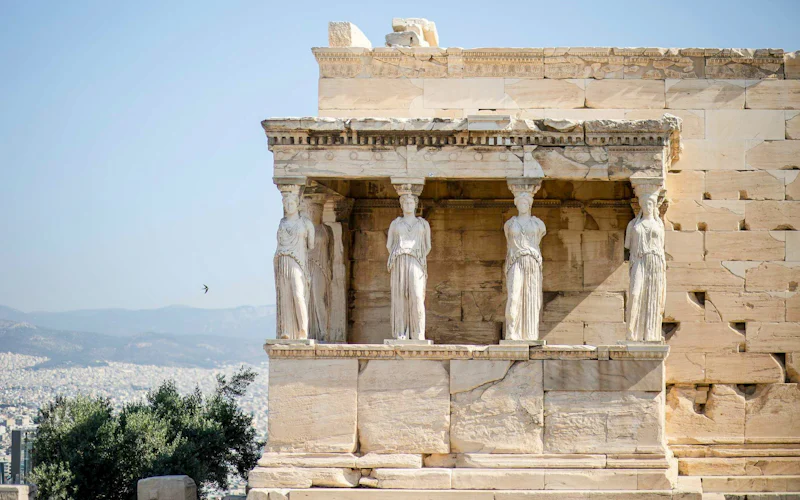
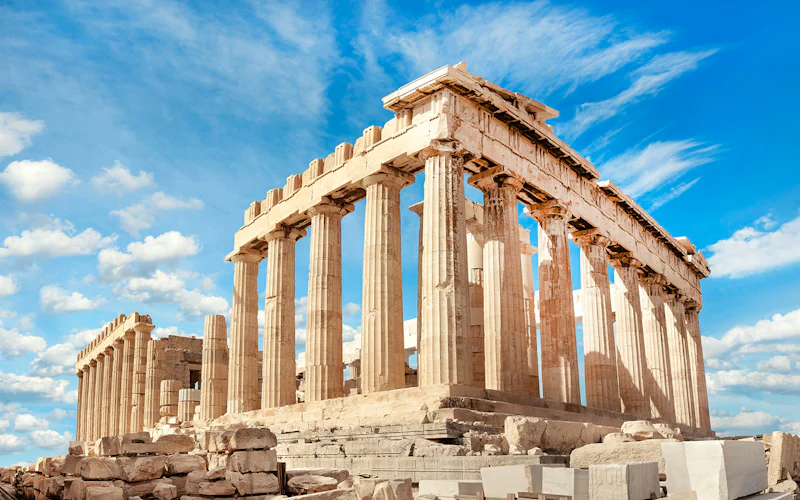
You cannot buy a Parthenon ticket on its own, and you do not need to. The temple stands in the middle of the Acropolis summit, so any Acropolis ticket, officially called "Acropolis & Slopes", gets you there. Walk up to the Propylaea gateway, step through, and the Parthenon fills the view ahead and to your right.
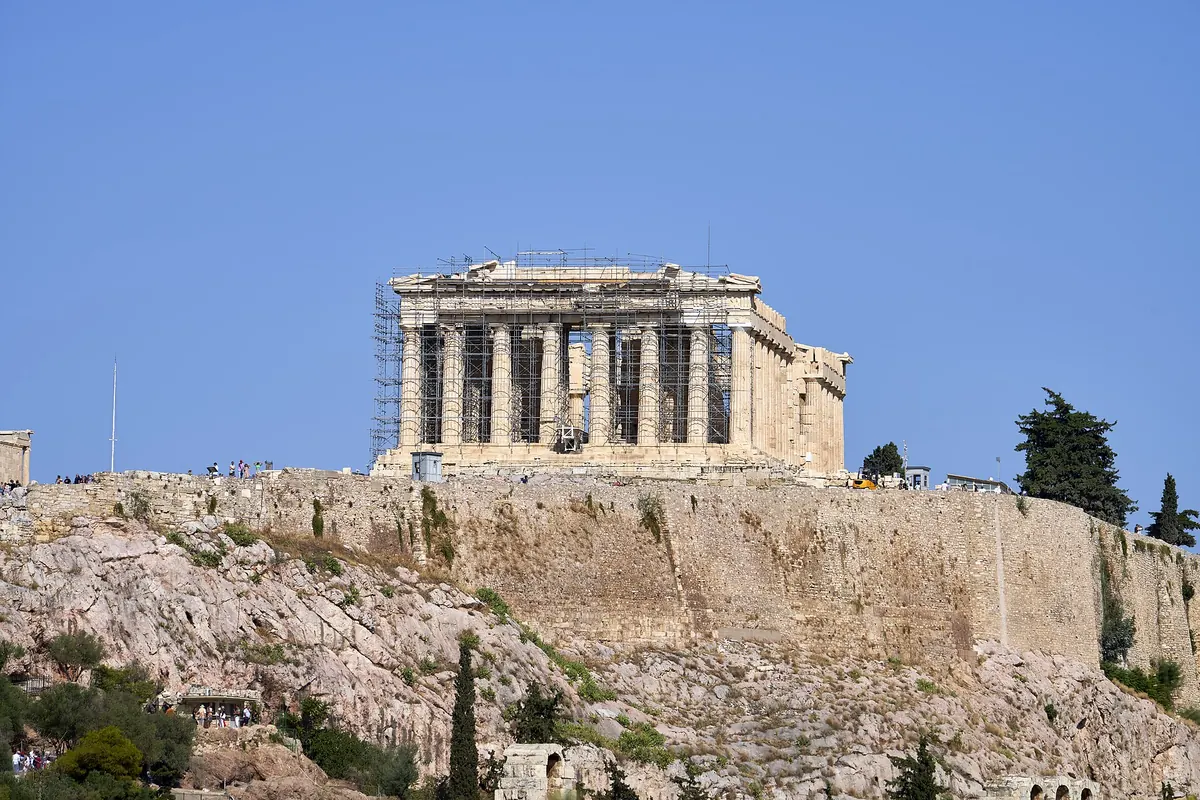
What you cannot do is go inside. The interior has been closed to visitors for decades while one of the longest restoration projects in the world continues, so you walk around the temple on marked paths, behind low barriers. Expect a crane or scaffolding on some part of it: that is the restoration, not bad luck.
The Parthenon was built between 447 and 438 BC, in the years after the Persian Wars, when Athens was at the height of its power. The architects were Iktinos and Kallikrates, and the sculptor Phidias directed the decoration, which was finished by 432 BC. The temple was dedicated to Athena Parthenos, the virgin goddess and protector of the city, and held a colossal statue of her in gold and ivory.
Its later history is just as dramatic. In the 6th century AD the Parthenon was converted into a church, later into a mosque under Ottoman rule, and in 1687 a Venetian shell hit the gunpowder stored inside and blew out its centre. In the early 19th century a large part of the surviving sculpture was removed and taken to Britain. Much of what remains in Greece is now in the Acropolis Museum.
Nothing is quite straight. The Parthenon's floor curves gently upwards in the middle, and its columns lean slightly inwards and swell a little towards the middle. These refinements make the building look perfectly straight from a distance. Stand at one corner and look along the base to see the curve.
The first view after the Propylaea. The traditional photo angle is from the north-west corner, with the temple at an angle rather than flat on.
The original main entrance, facing the sunrise. Fewer people walk around to this side, and the light is good in the late afternoon.
The square relief panels above the columns. Many are badly weathered, which is exactly why the best-preserved sculpture is now in the Museum.
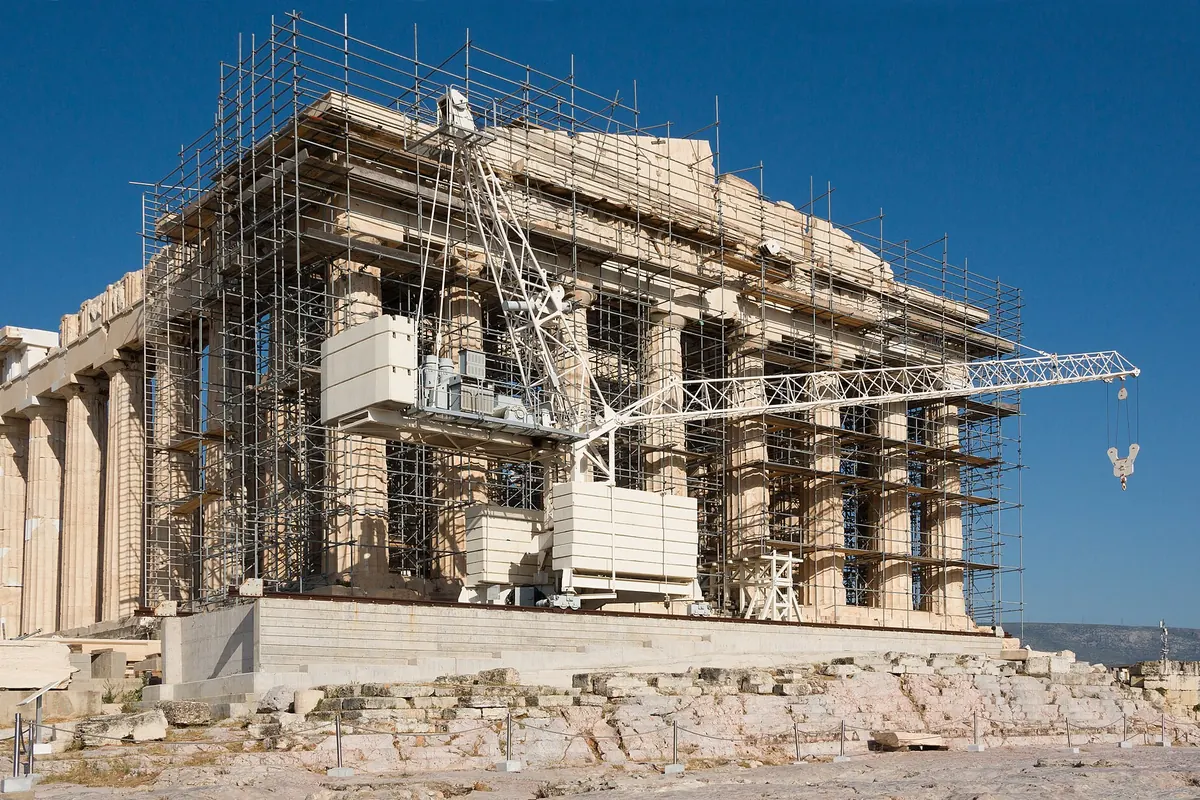
New, lighter marble pieces fitted into old columns show where the restorers have filled gaps. It is a live archaeological workshop.
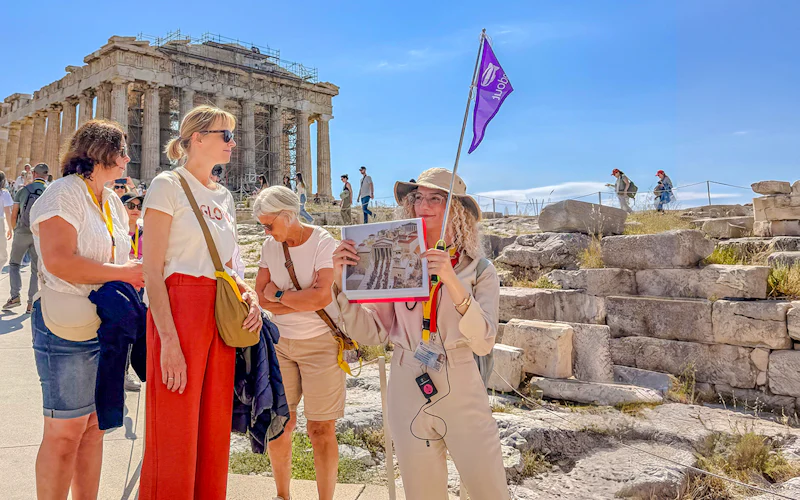
Come at 08:00 or late in the day. Between 09:00 and 13:00 the area in front of the west front is packed with groups. Bring a guide of some kind: signage is minimal, and an audio guide or live guide turns a ruin into a story.
Leave the tripod and selfie stick at the hotel. Both are not allowed on the site, nor are drones. And finish at the Museum: the Parthenon Gallery on the Museum's top floor shows the frieze in its original sequence, with the temple visible through the glass.
There is no separate Parthenon ticket: you book the Acropolis, and the Parthenon is part of it. These are the options most visitors choose:
The Acropolis & Parthenon ticket with audio guide gives you timed entry to explore at your own pace, from €38. The Acropolis & Parthenon guided tour with entry adds a live guide for about 2 hours, from €67, and the guided tour with early access puts you on the summit at opening time, before the crowds, also from €67. The Acropolis + Acropolis Museum combo covers the Parthenon and its original sculptures in one booking, from €74.
Check the date. The site is closed on 1 January, 25 March, 1 May, Orthodox Easter Sunday and over Christmas on 25 and 26 December. From November to March it closes at 17:00; in September the closing time steps down from 19:30. Our opening hours page shows every holiday.
Read the instructions on your voucher. It names your gate: the Main Entrance on the west side or the south entrance (Southeast Entrance) by the Theatre of Dionysus. Arriving a little before your slot is recommended in peak season, because everyone passes a security check. There is no food on the site: water is allowed, other food and beverages are not, so eat before or after in Plaka or near the Ancient Agora.
No. The Parthenon is part of the Acropolis site, so a standard Acropolis ticket (officially "Acropolis & Slopes") includes it.
No. Visitors walk around the outside of the temple, behind low barriers. The interior has been closed for decades while restoration continues, and scaffolding is often on part of the building.
Between 447 and 438 BC, with the sculptural decoration finished by 432 BC. The architects were Iktinos and Kallikrates, and the sculptor Phidias oversaw the decoration.
Many of the originals are in the Acropolis Museum, displayed in the glass Parthenon Gallery on the top floor, which is aligned with the temple itself. A large part of the frieze and pediment sculptures is in the British Museum in London.
Timed Acropolis entry with an audio guide on your phone.
from €38
Check best price Compare tickets