Acropolis monuments & buildings
One ticket covers all of them: the Propylaea, the Temple of Athena Nike, the Parthenon, the Erechtheion and the theatres on the south slope. Here is what each one is, where to find it and what not to miss.
The summit: four buildings, one ticket
The Acropolis has been settled since the Neolithic and fortified since the Late Bronze Age, but almost everything you see on the summit was built in a single burst in the second half of the 5th century BC, after the Persians had destroyed the earlier temples. The four buildings below were all part of that programme. The numbers match our Acropolis map.
1. Propylaea
The monumental gateway on the west side and still the way onto the summit for every walking visitor. Begun in 437 BC to a design by Mnesikles, it was never fully finished. Its wide central passage and columned halls were meant to prepare visitors for what came next. Today it is also the biggest bottleneck of the visit between 09:00 and 13:00.
2. Temple of Athena Nike
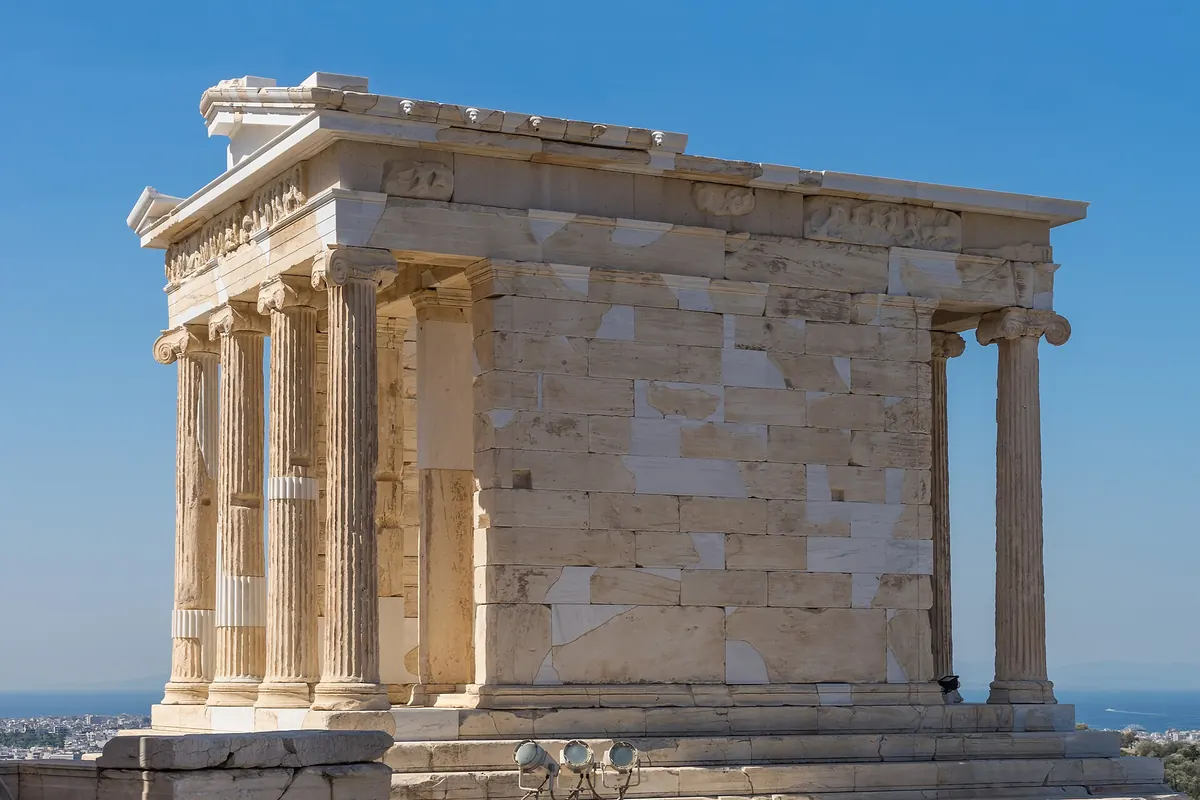
A small, perfectly proportioned temple on a bastion just south of the Propylaea, dedicated to Athena as Nike, goddess of victory. It was designed by Kallikrates and built around 427 to 424 BC, during the war with Sparta. It is amphiprostyle: four Ionic columns at the front and four at the back, and none along the sides. The temple has been taken apart and rebuilt several times in the modern era. Stop and look up to the right just before the gateway; it is easy to miss.
3. Parthenon
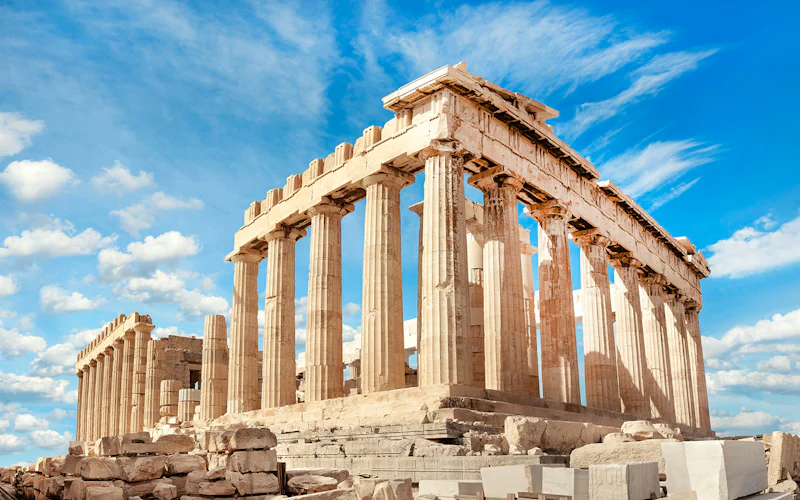
The temple of Athena Parthenos, built between 447 and 438 BC by Iktinos and Kallikrates, with sculpture overseen by Phidias. The largest building on the summit and the reason most people come. Read more in our Parthenon visitor guide.
4. Erechtheion
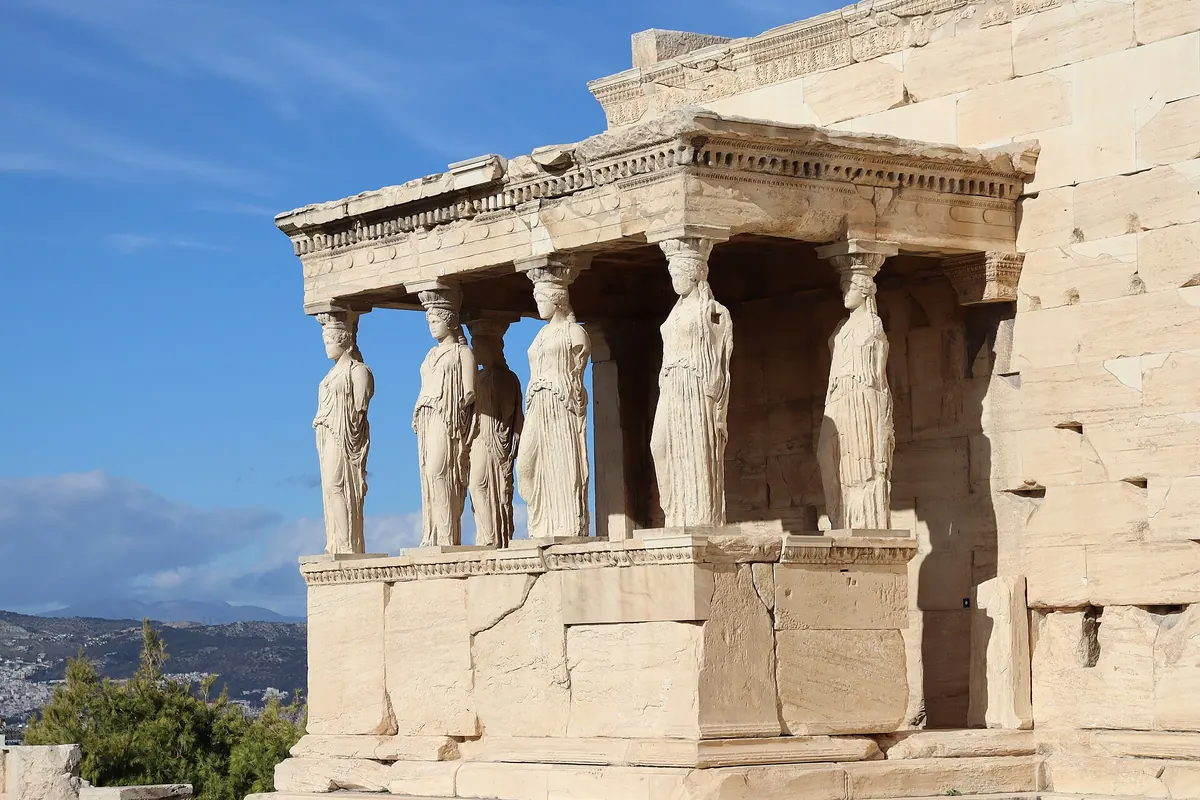
Built between 421 and 406 BC on the north side of the summit, on ground linked to the oldest cults of the city. Its unusual shape, on several levels, follows the sacred spots it had to include. The famous Porch of the Caryatids has six columns carved as young women. Those on site are copies: five originals are in the Acropolis Museum and one is in London.
See the originals the same day. The Caryatids, the Parthenon frieze and the Nike temple parapet reliefs are in the Acropolis Museum, a short walk from the Southeast Entrance.
The south slope: theatres and colonnades
The Acropolis ticket also covers the south slope, which many visitors skip. If you enter by the Southeast Entrance you walk through it anyway.
Theatre of Dionysus
The theatre where Athenian drama was born, and where plays by the great tragedians and comic poets were staged at religious festivals. In the 4th century BC it held around 17,000 spectators. The marble front-row seats, carved for priests and officials, are still in place.
Odeon of Herodes Atticus
A steep stone theatre completed in AD 161 by the wealthy Roman-era Athenian Herodes Atticus. Restored in the 20th century, it is still used for summer concerts and performances. You look down into it from the path to the Propylaea; the seats are only open to people with performance tickets.
Stoa of Eumenes
A long colonnade built in the 2nd century BC as a gift from King Eumenes II of Pergamon, giving theatre-goers shelter. Only the back wall and arches survive; the path from the Southeast Entrance runs along it.
Around the Acropolis: not included
Areopagus Hill
The bare rock beside the Main Entrance. Free, open, and a classic sunset viewpoint. The stone is very slippery.
Ancient Agora and Temple of Hephaestus
The ancient city centre below the north-west side of the hill, with the best-preserved Greek temple in Athens. Separate ticket, included in the Athens Multipass.
Acropolis Museum
The originals from the summit. Separate ticket or combo.
Temple of Olympian Zeus
The giant columns south-east of Plaka. Separate ticket, included in the Multipass.
The Acropolis through the ages
"Acropolis" means "high city", and for most of antiquity the sacred rock was both a fortress and a sanctuary. Its Mycenaean walls date from the 13th century BC, when the hill was a fortified royal seat. Over the following centuries it became the centre of worship of Athena, the goddess who gave the city its name.
In 480 BC, during the Persian invasion, the old temples on the summit were burned. A generation later, under Pericles, ancient Athens rebuilt them on a grand scale: the Parthenon, the Propylaea, the Erechtheion and the Temple of Athena Nike, a monument to victory. This was the Athens of democracy, of the theatre on the south slope and of Socrates, who taught in the Agora below. The harmony of the Parthenon's proportions made these buildings a model for architects ever since, and the Acropolis a symbol of ancient Greece and of Western civilization.
Later history was harder on the monuments. The Parthenon was converted into a church in the 6th century AD and later, under Ottoman rule, into a mosque. In 1687 a Venetian bombardment hit the gunpowder stored inside and blew out its centre. What you see today are the ruins left after that blast, carefully restored since the 1970s.
Is the Acropolis a Wonder of the World?
No. Despite how often it is called one, the Acropolis was not among the Seven Wonders of the Ancient World. It has been a UNESCO World Heritage Site since 1987, which is arguably the more useful title: it is why the restoration work you see on site exists at all.
Frequently asked questions
The four main buildings on the summit are the Propylaea (gateway), the Temple of Athena Nike, the Parthenon and the Erechtheion. On the south slope you find the Theatre of Dionysus, the Odeon of Herodes Atticus and the Stoa of Eumenes.
It honoured Athena as Nike, goddess of victory, at a time when Athens was at war with Sparta. Its small size suits its position on the narrow bastion beside the entrance.
No. The Temple of Hephaestus stands in the Ancient Agora, a separate site with its own ticket. It is included in the Athens Multipass together with the Acropolis.
No, the Acropolis is not one of the Seven Wonders of the Ancient World. It has been a UNESCO World Heritage Site since 1987.
One ticket, every monument.
Timed Acropolis entry includes the summit and the south slope.
Acropolis & Parthenon Tickets with Audio Guide
- Book now, pay later
- Audio guide option
- Explore at your pace
from €38
Check best price Compare tickets